/ The Minimal Scientist: Environment

Pages

Showing posts with label Environment. Show all posts

Monday, August 2, 2021

Ponder - ice melt extinction

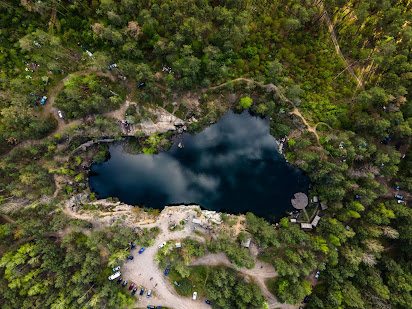
Photo by Artem Zhukov on Unsplash

Take a moment to ponder this:
What if when the ice melts, previously extinct species return? Whilst others become extinct.


The melting ice is reducing habitats around the globe putting many species at risk of extinction, but it is also creating them. Places where ice once clung, now provide additional land for colonisation. Ice also hides many secrets within its frozen depths; seeds and pollen kept in suspension for millennia. As the ice melts, could these species come back and start colonising in amongst modern species?


🜃


Monday, May 17, 2021

Estimation of river water levels using cameras

Niagara Falls, NY Photo by Cameron Venti on Unsplash

Many UK rivers have cameras up and down their profile i.e. for things like wildlife tracking and identification. Vandaele, Dance and Ojha looked into utilising these cameras for water level estimation. They develop a deep learning algorithm to do just this. They annotate images from cameras along the River Avon and Severn, UK (21 November - 5 December 2012), isolating flood events, finally comparing their results with local river gauges. This algorithm had an accuracy >91%. They then try the algorithm with a year long sample (from 1 June 2019 to 31 May 2020) for the same rivers. Again the correlation to local gauges is clear, showing that the  use of cameras along rivers could help accurately predict flood events, particularly in areas with no gauges, thus providing some warning to residents and/or farmers. Low water levels are covered, but nothing is mentioned about drought conditions. This could be an issue as drought conditions are just as big of an issue as flood conditions. Dry land does not allow for optimum (or any) infiltration by rain, meaning flooding is more likely. As a deep learning algorithm that uses pixels filled with water, it is very likely that it could adapt and learn to interpret drought condition data too.

Vandaele, R., Dance, S.L. and Ojha, V., 2021. Deep learning for the estimation of water-levels using river cameras. Hydrology and Earth System Sciences Discussions, pp.1-29.

Monday, May 10, 2021

Abandoned, but still beautiful

Image from Landschaftspark.de

Countries the world over are home to derelict buildings those with a strong industrial past are likely to have at least a few substantial abandoned plots. Plots such as old factories cover large areas of land and are normally deemed unsafe to be near and unseemly. But should this be the case? Unless the ground contains harmful chemicals abandoned buildings and structures can be made safe. The following is an example of just what we are missing by nut utilising these unusable locations.

Landschaftspark (Landscape Park) in Duisberg, Germany was once the Thyssen ironworks. At 180 acres it boasts green spaces, gardens, an old railway and five areas of water way. As well as the landscape and industrial heritage a wide variety of events are also held in and around the park. Everything from bike rides to film showings and music festivals can be experienced in Landschaftspark.

The diversity of land uses on these sites results in a wide variety of options to adapt them into. As such pretty much anyone can find something to enjoy and provide the time-out they need. Cycling, walking, running, yoga, music and films, gardening and that is to name but a few. Beyond the benefits we will gain these sites will also provide habitats including food and places to raise young. Plants also benefit, Landschaftspark is resident to at least 700 different plant species. From this it could be discovered that Landschaftspark or any other reclaimed industrial site is home to rare, endangered or even a species thought to be extinct.

Old industrial sites may be something of an eye sore, but they have so much potential to be beautiful, practical and an amazing place for both people and wildlife.


Monday, May 3, 2021

Amphibian diversity in the Waterfalls of Lubuklinggau City, South Sumatra


Waterfalls and other watery locations are more often than not, frequented by amphibians, which are an integral part of any ecosystem. The paper by Samitra and Rozi (2021) investigates the diversity of amphibians at Temam and Sando Waterfalls, Lubuklinggau City. No trapping was used, only Visual Encounter Survey (VES) and time search methods, but some individuals were taken back to the lab for identification (and then relesed). Lubuklinggau City has a great diversity of habitats, everything from secondary forest to rice fields, meaning there are many potential locations for amphibians to be found. The focus here though are the Teman and Sando Waterfalls. Both sites are major tourist attractions, Teman has some convenience facilities, whilst Sando remains natural. Other research conducted in neighbouring areas, found significantly more species (11 compared to 55); however, there were several factors that were different between the studies, namely search hours and altitude. The difference in altitude would also make the ecology of the search areas different. The authors also conclude that the diversity at each waterfall is comparable to the other.


Google scholar search: 

Samitra, D. and Rozi, Z.F., 2021. Amphibian diversity in the Waterfall of Lubuklinggau City, South Sumatra. Jurnal Biota, 7(1), pp.10-16.

Saturday, April 17, 2021

The environment in the 2020 pandemic

We all know how devastating Covid-19 was to humans globally, it held nothing back, showing no discrimination. Whilst the most obvious impact was to humans both health wise and economically, there was another victim, the environment. What though was the impact to the environment? We might not know for some years, some guesses can be made though. No flying for a year meant less CO2 emitted, fewer cars on the roads also contributed to this. People not being in offices lowered the demand for electricity. Fewer people in wild places reduced litter contamination and water pollution eased as not only was there less litter entering waterways, but also fewer chemicals from factories. Some of these balanced out with humans just being somewhere else; for example, humans were not in offices but in homes which also needed heating or power for computers as well as comforts such as hot food and drinks. Paudel (2021) has gone some way to quantify the Covid impact upon the environment focusing on forest fires in Nepal, South Asia.

Forest fires have numerous origins, from natural causes like lightening to anthropogenic causes. The paper uses satellite imaging to study factors such as heat intensity and forest fire incidence occurrence to identify what, if any influences Covid 19 has had upon anthropogenic fire incidence. The study found that the brightness of fires and the number of incidents reduced and actually lead to an economic gain of 360 Rupee's per household (~3 US$) (likely through reduced property/infrastructure damage costs). 

They also note the decrease in particulate matter (PM2.5) and NO2 in numerous cities globally. These short-term improvements can be no replacement for cooperation and improved management strategies or any forest nor important climate change work.

Paudel, J., 2021. Short-run environmental effects of COVID-19: Evidence from forest fires. World Development, 137, p.105120.


Sunday, April 11, 2021

Forest loss in global protected areas


Protected areas are an essential component of conservation and climate change reduction. However, protected areas are not always as effective as they could be, this has previously been seen to correspond to gross domestic product (GDP), specifically where forested protected areas are concerned. The paper by Wolf et al (2021) aims to analyse the effectiveness of protected areas with regards to limiting forest loss.

They found that protected areas did reduce forest loss, but did not eliminate it completely. Those with the strictest management showed less deforestation than those with little to no management. The creation of new protected areas did see a slight increase in deforestation both within the protected area and in near by unprotected woodland.

Results show that protected areas within South Africa were the most effective in preventing forest loss. Protected areas with lower deforestation are expected to have other benefits, such as lower species loss, whether due to greater habitat availability or effective suppression of illegal hunting. As well as protecting biodiversity, protected areas also protect the immense carbon sink that is our forests. Deforestation not only stops this sink, but depending on the use of the wood, can also release the carbon back into the atmosphere. Reducing or preventing deforestation through protected areas is essential to tackle climate change.

Once again GDP was demonstrated to have a significant influence on the effectiveness of protected areas. The authors suggest that, to help maintain and improve protected areas, countries of higher GDP should assist those with lower GDP. This will aid actions such as species recovery/reintroduction as the acts can be done sooner rather than waiting for the GDP to increase to a point they can act themselves, by which point the species may be beyond saving, or be incapable of reintroduction.

Aichi Target 11: By 2020, at least 17 per cent of terrestrial and inland water, and 10 per cent of coastal and marine areas, with a focus on areas particularly important for biodiversity and ecosystem services. Areas are conserved through effective and equitable management as well as being ecologically representitive. Areas must also be well connected whilst merging seamlessly with the surrounding land and seascapes and coordinating with other conservation measures.

The Aichi Target was due for 2020, but the authors found that when corrected for with deforestation (effectiveness), current protected area was only around 6.5%. Again correcting for deforestation, or effectiveness, the authors find that the actual percentage of protected land needed is 41.3%. Clearly this target has not been met. Hope should not be lost, it is a goal that should be sought no matter how long it takes, but this should not lead us into complacency. Thinking that if met in 2050 it is fine too, no, the sooner the better.

Wolf, C., Levi, T., Ripple, W.J., Zárrate-Charry, D.A. and Betts, M.G., 2021. A forest loss report card for the world’s protected areas. Nature Ecology & Evolution, pp.1-10.

Convention on Biological Diversity - Target 11

Monday, April 5, 2021

Climate change impact to forest species adaptation and/or migration


Climate change means that many species are currently inhabiting an area that will become unsuitable to them (i.e. temperature and rain). These climatic alterations will require species to adapt, some rapidly so, otherwise they face local extinction (extirpation) or range constriction. The paper by Gougherty, Keller and Fitzpatrick (2021) studies the species balsam poplar (Populus balsamifera), looking at the flowering time genes. These are strongly connected to seasonal and cyclic behaviour in relation to climate.(phenology), they are crucial for ensuring population viability in future climates.

They found that populations at the centre of the range are best prepared for any of the three types of offset (change) discussed in the paper. These included: local adaptation with no migration, migration to anywhere else within the range (forward offset) and reverse offset where any of the current populations are already possess adaptations to potential future climates. In comparison to central populations, those in the eastern and northern most ranges are the most likely to experience extinction. It was identified that populations in the eastern most range would likely need to migrate around 5000km, an unlikely event naturally given seed and pollen dispersal limitations and the geography of the region.

The work of the team highlighted that for P. balsamifera the influence of temperature was secondary to that of changes in winter precipitation. This along with recent research in local adaptation contradict the presumed leading/trailing edge where poleward shifts were expected to see populations experiencing the first temperature changes outside of their normal range being the first to struggle.

A key take home message is that it is populations that adapt to climate change, not a species.

Gougherty, A.V., Keller, S.R. and Fitzpatrick, M.C., 2021. Maladaptation, migration and extirpation fuel climate change risk in a forest tree species. Nature Climate Change, 11(2), pp.166-171.


Tuesday, March 2, 2021

My Clean Nature

We are all now very aware of how polluting cars are, releasing carbon dioxide among other harmful chemicals. These are released at ground level and ultimately end up in the atmosphere, not only impacting our health directly, but the health of the whole planet. The race for safer, cleaner travel has been long, public acceptance of the change has been arduous. At first diesel was thought to be the best option, more recently this was proven incorrect and electric vehicles took to the stage. Now though Hyundai have gone to the next stage by creating a hydrogen powered vehicle, the Nexo. Their biggest goal with this release is to enlighten the world on hydrogen as a clean fuel source, with water being one of the only by products when used.

Of course, this is a great leap forward and hopefully the start of humankind being able to travel without having the damaging impacts that currently occur. However, this won’t be the focus here. Instead let us look at the angle they have taken with marketing.

Marketing may not be the most positive thing for those outside of the business, but the ‘My Clean Earth’ movement being run by Hyundai really does instil a happy and positive vibe. The adverts use the members of Korean Pop (KPop) band BTS to introduce what they think of under the term ‘My Clean Earth’.  The video adverts are slow and calming as each member gives their version; Jung Kook looks to the emerald oceans endless waves, a visual representation of our infinite possibilities; V’s is the first snow fall to represent unexpected events; Jin’s pick is the clear sky and how just like the clouds, moon and stars we all live together; J-Hope loves the bright sunshine hoping our futures are similarly bright; RM went for the pure rain, noting how clean everything is after it rains; SUGA loves the stars and how they light up the universe when they come together and finally Jimin plays on the word forest by changing it to ‘For rest’ noting how peaceful they are.

Nature inspires joy in many of us and when we continually hear how damaged the planet is it can be easy to forget those feelings. Yet these adverts help to bring these emotions back, often taking us to a moment when these sentiments were strongest. Some don’t feel as at peace in the wilderness, for them the city is where they are most at home. For those that do get their energy from the natural world the Hyundai x BTS collaboration highlights this world at its best. So, let us do what we can to keep our planet clean from the air to the oceans.

The other aspect to the campaign is the ‘Because of you’ line used in the adverts and Instagram posts. This could be interpreted in multiple ways; however, it is likely that they are inferencing that we should protect our world for ourselves (using a hydrogen powered car assists in this). As well as securing a healthier environment for ourselves in the present, acting now secures it for our future selves and descendants.

The overarching aim of BTS is to enable their listeners to start loving themselves through self-belief and enjoying the simple things. Enjoying the simple things is certainly a key aspect of the Hyundai x BTS partnership, just the natural beauty of our world. It may be a campaign to sell cars, but it can teach us to slow down and enjoy the things we cannot assign a value to (though many try). The sun warming our backs, the fresh smell after rain, flowers blooming, just relax and take a breather. Having time to gather your thoughts and enjoy beautiful things is always important


“We hope this world will always stay with us.”

BTS, 2020

Sunday, February 21, 2021

Pyrocumulonimbus clouds


Clouds, they evoke do many emotions and feelings; some good, like when you look up and see a cloud that looks like a fluffy bunny. Darker feelings of dread creep in when storm clouds rest on the horizon ready to pommel the water logged ground and crops.

Whilst most clouds are formed through the water cycle, some clouds have origins of a slightly different nature. Pyrocumulonimbus (pyroCb) are clouds connected to volcanic activity or fires. The intense heating of air ascends, condensing when the rising air becomes saturated due to cooling. They are quite common, leading to the formation of small clouds over fires in the environment, think of them like Frozen's Olaf's personal flurry, except they are created through intense heat.

For this article the focus will be on pyroCb clouds created by fires. Tory and Thurston (2015) conducted a literature review of pyroCb touching on how they are similar to thunderstorm (dynamics), but rather than requiring warm moist low-level air, the air needs to be warm and dry. They also discuss how the pollution in the clouds caused by the fire, delays rain and hail formation, resulting in the upper cloud regions containing significantly more snow and ice, far less hail in the middle regions and consequently less rainfall.

The presence of a pyroCb is potentially a serious issue, their presence has often been associated with fire behaviour that is highly unpredictable. It is discussed that this is primarily the case for buoyancy driven plumes, rather than bent plumes formed by wind driven fires. However, much of the evidence is generated from human observation and reveals the scope for further research into these speculations. Buoyancy plumes are thought to lead to indrafts, bringing fresh air to the fire, intensifying the flames.

Plumes can also carry burning embers or firebrands up and away from the main fire, to new dry areas creating new fires. PyroCb clouds have the potential to incite lighting that reaches from the cloud to the ground, this too can ignite new fires.

Overall the formation of pyroCb clouds requires significant volumes of fire heated air and a source of moisture from the environment or the fires fuel source is also necessary. It is primarily large fires that create pyroCb clouds, due to these large volumes of hot air required. Changing climates, has resulted in an increase of forest and grassland fires, the intensity and severity of these fires has also increased. As such, the formation of pyroCb clouds will likely also increase in frequency. In tern leading to fires that spread further and faster (due to cloud to ground lightening or the transportation of embers).

This was a review of the paper Tory, K.J. and Thurston, W., 2015. Pyrocumulonimbus: A literature review. Bushfire and Natural Hazards CRC: East Melbourne, VIC, Australia.

Further reading:

Fromm, M., Lindsey, D.T., Servranckx, R., Yue, G., Trickl, T., Sica, R., Doucet, P. and Godin-Beekmann, S., 2010. The untold story of pyrocumulonimbus. Bulletin of the American Meteorological Society, 91(9), pp.1193-1210.

Sunday, February 7, 2021

Think like a minimalist


There is no harm in stuff, if you use it, love it or need it then possessing it causes no harm. In the first half of this year (2019) the Konmari method for minimising our hoards became very popular. Let’s say you gave Konmari a go or you’re just happy with what you have. Now what? It is human nature to want to treat ourselves after a job well done, tackling a daunting task such as tidying and getting rid of things we’ve had for years is one such job. The satisfaction of seeing a long-lost surface is to some unbeatable. So why buy more?

The more we buy the more is made and therefore, the more resources are used for more to be thrown away. This is not only bad for the planet but if uncontrolled it can become bad for our health. As such, here are some tips on thinking like a minimalist. Thinking like a minimalist doesn’t mean you have to be a minimalist. Yes having/ buying less is good for our wellbeing and bank account but so is purchasing a long-desired item (more so for happiness than bank accounts).

Imagine the situation, you enter a shop, any shop (food, clothing furniture etc.). After looking around you find something you just have to have. Now before you add it to your basket stop. Really look at the item, if you can pick it up do so. Turn it over in your hands and look at its condition is it marked in any way? Does the pattern or design look right i.e. is it misprinted or upside-down. Having picked it up and looked closely do you still like it? Still attracted to it, now think about where you would put it, consider each room as well as who lives with you. If you cannot find a place or you have someone living with you who could potentially damage or be harmed by it then reconsider. If the item passes these questions can you afford it, consider any bills or food shops for both that month and the following. So far so good the item is winning but, what about in a month? Remember obvious as it may sound the item won’t just disappear when you no longer enjoy it you will have to get rid of or repurpose it. Doing so takes time and effort so consider your usual week and see if you will have time to take it to a charity shop or upcycle at home. Even putting in a cupboard or bag to go at a later date should also be considered, could you handle the ‘clutter’?

All these considerations probably sound like they’re going to take forever to do when all you want is to go in and buy what you want. It can always be taken back later. Yes, to begin with asking yourself these questions for every item, food or clothing piece could take a while. Soon though it will be second nature, an inner feeling of ‘I don’t need that’ or a ‘Yes I will enjoy or use this for many years to come’. Thus, you will be able to save money, have less stuff, be able to clean easier and do your bit to help the planet. Best of all you’ll feel better, tidy home, tidy mind.

Question

Do you have any of your own techniques for reducing how much you buy?

Friday, January 22, 2021

New in nature 🌲

Winter. It's cold and the only new thing maybe a new layer of snow or the gifts received. In the natural world Spring is most commonly associated as being the season of new. Unburst buds becoming new leaves, new life in the fields and trees. New doesn't just happen in Spring though, mushrooms erupt in the Autumn, their fruiting bodies popping out of the ground and trees to shower spores on the world. Fruits too are commonly found in Autumn. New is a constant phenomenon, one that humans have a strong connection with; new shoes, new car, new phone, humans became obsessed with new.

More recently this changed as many realised the harm 'new' causes to the planet. Whether that be from waste, the use of resources or the lack of recyclability for too many items. There has become a move towards recycled and reused as well as pre-loved items, such as those sold on Vinted. New is something nice and something that most people love, but new in nature means so much more. New in nature is more about new life, whether that is offspring or new leaves on trees. New in nature is about survival of the individual and species.

When you consider the concept of new in the natural world, it puts perspective on that new bag you were looking at the other day, or the new phone waiting at the end of your contract. There are new things humans can look forward too without the environmental impact. A walk in the woods at any time of year will provide something new. Last year's seedlings will begin to emerge, flowers will bloom, fruits, nuts and seeds from trees and vegetation will form, mushrooms can be found, animals may be seen one visit and not the next with migratory species appearing, bringing a completely new almost exotic feel to the woodland. It is not just in woodlands that the new of nature can be experienced. Coastlines changing bring new species, again including some migratory. Even climate change will bring new to many environments. However, much of the climate change new may cause other problems such as competition between species, this will be especially problematic to niche species.

To some new is scary and something to avoid, but it is part of life for nature and humans. It can be problematic (climate change), but it can also be a joyous thing (new life). Appreciate the new and old.

Share your thoughts in the comments or come over to Discord to chat about this and other subjects.

https://linktr.ee/environmintleaf


Saturday, June 1, 2019

Peppermint enjoys the ecological benefits of green infrastructure


The benefits of green infrastructure for humans are clear but its not just us who feel their benefits. Any bit of green infrastructure acts as an island or corridor to many species who with the introduction or enlargement of a city would ordinarily be cut of from other areas of habitats and wider species populations. They provide habitats in which species can reside permanently or temporarily whilst on route to new territory i.e. when young birds leave the nest. Not only this but green infrastructure can act as a sanctuary during bad weather such as an exceptionally cold winter.

Friday, May 24, 2019

Peppermint helps at a community garden


Green rooves and vertical gardens are excellent ways to slip greenery into a city (or town) where space is limited. However, it’s not easy to stand in a vertical wall or green roof unless on a large building which you have easy access to. Therefore, parks are often the best place to go to and the only other option. Parks though do not provide an opportunity to get hands on and plant your own flowers or fruit and veg. This where community gardens/ allotments really come into their own. There are many across the country with most towns and cities having at least one. For some just being in the outdoors is sufficient, for others a hands-on approach is required to fully relax and unwind (adults and children). A hands-on approach is also helpful in teaching children where their food comes from and the importance of bees and other insects in pollinating not only wild flowers but also food crops. Enabling people from all backgrounds a chance to grow their own food and flowers or help others to do so, provides communities with a healthier, happier more respectful. Growing more of our own food locally also helps combat climate change by reducing stress on land and transport miles.

Friday, May 17, 2019

Peppermint looks to descend a vertical garden


It’s not just rooves which can be made green. Many new buildings are being designed with green walls already part of their infrastructure. The benefits of green walls also called vertical gardens, are similar to those of green rooves. Unlike green rooves however, green walls provide most of the benefits at our level (though shed rooves are not far off). As well as taking carbon dioxide out of the atmosphere closer to where we breathe they are also more visible as we go through our day than green/ garden rooves. Standing in a roof garden is far easier than standing in a vertical one though.

Friday, May 10, 2019

Peppermint explores a roof jungle


Last week we looked at the broad  topic of green infrastructure, today is a closer look at green rooves. No these are not rooves which have been painted green, they’re rooves which have what is effectively a raised bed on the top (in small scale cases) or a full garden i.e. on skyscrapers. Small scale green rooves are great for a little cheer but also reducing rain runoff into drains and so helps to reduce flooding. Larger scale projects provide people with an escape from work and other daily stresses. As well as mental health benefits larger green rooves i.e. those with trees and shrubs, also help to reduce carbon dioxide and other small particle levels.

Friday, May 3, 2019

Peppermint enjoys green infrastructure


Daily life is becoming more stressful with very few being able to go through their week without stress levels reaching critical levels at least once. As well as work becoming more stressful, it is also becoming harder for many to switch off from the work mindset. It has been proven in many [peer reviewed] studies that getting into nature can reduce stress levels and aid concentration. So, urban planners are starting to incorporate more green infrastructure into their models. Green infrastructure refers to anything from street trees to parks. Not only can it help improve mental health but physical health will also be improved. Trees in particular but also hedges and shrubs help reduce carbon dioxide levels as well as other pm2.5 -10 (particulate matter). These are microscopic particles which enter the lungs and given their size can get very deep influencing lung function. For us to live healthy happy lives, these particles must be kept at or below safe recommended levels. This is why green infrastructure is so important.


Friday, April 26, 2019

Peppermint looks at climate lag


Though climate is continuously recorded the changes created by various factors is often negligible for a long time, such as the effects of increased greenhouse gases. The time it takes for changes to occur to a measurable state is called climate lag. This lag is normally caused by feedback and adjustments in complex environmental systems (some we still don't fully understand). Climate lag can mean that despite our best efforts the things we do to reverse/reduce climate change, appear not to work. Similarly, we also do not know if something we are doing is harmful and so exacerbating climate change.

Friday, April 19, 2019

Peppermint helps with habitat restoration


Following a look at seed banks Peppermint is looking at habitat restoration. Also called rewilding, habitat restoration is an important way to combat climate change and its impacts. By returning an area of land to its original state species numbers can be increased, reducing extinction risk. Afforestation will also help to reduce carbon dioxide levels, clean the air and stabilize slopes, among other benefits.

Friday, April 12, 2019

Peppermint makes a deposit to the seed bank


Climate change means that many species are struggling. So, whilst Peppermint isn’t quite doing it correctly, he is on the right lines. A seed bank means storage and preservation of seeds, a gene bank of plants. It is one of the best ways of ex situ (off site) conservation of plants as the seeds take much less space and do not need the same sort of care as a full plant. They still need care to ensure viable seeds but not the watering and feeding like growing plants. Loss of plant species does not just mean loss of potential medical breakthroughs but also loss of whole ecosystems.

#climate #blogging #environment #environmintleaf #peppermintthecandycanezebra

Friday, April 5, 2019

Peppermint and climate change


It is time now to look at climate change and whether you are a firm believer or a skeptic, Peppermint and I believe some important facts and factors are being missed out. One fact in particular is not covered much for the public. That is that climate change would happen anyway. It is often used as a climate change skeptic excuse. However, what they generally forget to say is that natural climate change takes 1000’s of years if not 100, 000’s. What we are experiencing now and why we are to blame is anthropogenic (human) climate change. As in the unnatural levels of carbon dioxide, deforestation and other pollution types are all caused by humans. Otherwise the planet is in a balanced state that gradually changes allowing evolution and adaptation to occur. So yes, climate change is a natural cycle but current climate change is anything but natural and that is the problem.
#climate #blogging #environment #environmintleaf #peppermintthecandycanezebra

Ponder - ice melt extinction

Photo by Artem Zhukov on Unsplash Take a moment to ponder this: What if when the ice melts, previously extinct species return? Whilst other...