/ The Minimal Scientist: diversity

Pages

Showing posts with label diversity. Show all posts

Monday, May 10, 2021

Abandoned, but still beautiful

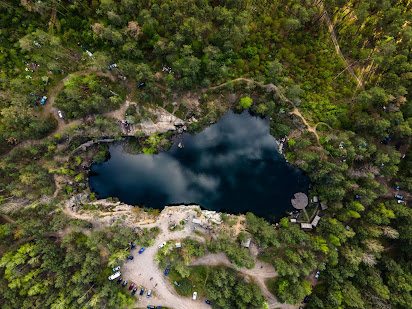
Image from Landschaftspark.de

Countries the world over are home to derelict buildings those with a strong industrial past are likely to have at least a few substantial abandoned plots. Plots such as old factories cover large areas of land and are normally deemed unsafe to be near and unseemly. But should this be the case? Unless the ground contains harmful chemicals abandoned buildings and structures can be made safe. The following is an example of just what we are missing by nut utilising these unusable locations.

Landschaftspark (Landscape Park) in Duisberg, Germany was once the Thyssen ironworks. At 180 acres it boasts green spaces, gardens, an old railway and five areas of water way. As well as the landscape and industrial heritage a wide variety of events are also held in and around the park. Everything from bike rides to film showings and music festivals can be experienced in Landschaftspark.

The diversity of land uses on these sites results in a wide variety of options to adapt them into. As such pretty much anyone can find something to enjoy and provide the time-out they need. Cycling, walking, running, yoga, music and films, gardening and that is to name but a few. Beyond the benefits we will gain these sites will also provide habitats including food and places to raise young. Plants also benefit, Landschaftspark is resident to at least 700 different plant species. From this it could be discovered that Landschaftspark or any other reclaimed industrial site is home to rare, endangered or even a species thought to be extinct.

Old industrial sites may be something of an eye sore, but they have so much potential to be beautiful, practical and an amazing place for both people and wildlife.


Monday, May 3, 2021

Amphibian diversity in the Waterfalls of Lubuklinggau City, South Sumatra


Waterfalls and other watery locations are more often than not, frequented by amphibians, which are an integral part of any ecosystem. The paper by Samitra and Rozi (2021) investigates the diversity of amphibians at Temam and Sando Waterfalls, Lubuklinggau City. No trapping was used, only Visual Encounter Survey (VES) and time search methods, but some individuals were taken back to the lab for identification (and then relesed). Lubuklinggau City has a great diversity of habitats, everything from secondary forest to rice fields, meaning there are many potential locations for amphibians to be found. The focus here though are the Teman and Sando Waterfalls. Both sites are major tourist attractions, Teman has some convenience facilities, whilst Sando remains natural. Other research conducted in neighbouring areas, found significantly more species (11 compared to 55); however, there were several factors that were different between the studies, namely search hours and altitude. The difference in altitude would also make the ecology of the search areas different. The authors also conclude that the diversity at each waterfall is comparable to the other.


Google scholar search: 

Samitra, D. and Rozi, Z.F., 2021. Amphibian diversity in the Waterfall of Lubuklinggau City, South Sumatra. Jurnal Biota, 7(1), pp.10-16.

Ponder - ice melt extinction

Photo by Artem Zhukov on Unsplash Take a moment to ponder this: What if when the ice melts, previously extinct species return? Whilst other...