/ The Minimal Scientist: article

Pages

Showing posts with label article. Show all posts

Monday, May 10, 2021

Abandoned, but still beautiful

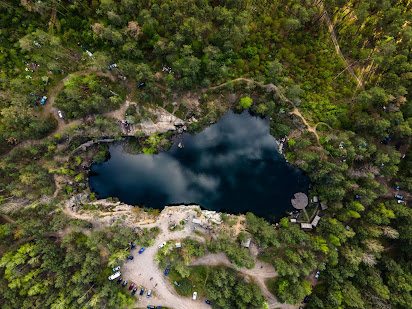
Image from Landschaftspark.de

Countries the world over are home to derelict buildings those with a strong industrial past are likely to have at least a few substantial abandoned plots. Plots such as old factories cover large areas of land and are normally deemed unsafe to be near and unseemly. But should this be the case? Unless the ground contains harmful chemicals abandoned buildings and structures can be made safe. The following is an example of just what we are missing by nut utilising these unusable locations.

Landschaftspark (Landscape Park) in Duisberg, Germany was once the Thyssen ironworks. At 180 acres it boasts green spaces, gardens, an old railway and five areas of water way. As well as the landscape and industrial heritage a wide variety of events are also held in and around the park. Everything from bike rides to film showings and music festivals can be experienced in Landschaftspark.

The diversity of land uses on these sites results in a wide variety of options to adapt them into. As such pretty much anyone can find something to enjoy and provide the time-out they need. Cycling, walking, running, yoga, music and films, gardening and that is to name but a few. Beyond the benefits we will gain these sites will also provide habitats including food and places to raise young. Plants also benefit, Landschaftspark is resident to at least 700 different plant species. From this it could be discovered that Landschaftspark or any other reclaimed industrial site is home to rare, endangered or even a species thought to be extinct.

Old industrial sites may be something of an eye sore, but they have so much potential to be beautiful, practical and an amazing place for both people and wildlife.


Monday, April 5, 2021

Climate change impact to forest species adaptation and/or migration


Climate change means that many species are currently inhabiting an area that will become unsuitable to them (i.e. temperature and rain). These climatic alterations will require species to adapt, some rapidly so, otherwise they face local extinction (extirpation) or range constriction. The paper by Gougherty, Keller and Fitzpatrick (2021) studies the species balsam poplar (Populus balsamifera), looking at the flowering time genes. These are strongly connected to seasonal and cyclic behaviour in relation to climate.(phenology), they are crucial for ensuring population viability in future climates.

They found that populations at the centre of the range are best prepared for any of the three types of offset (change) discussed in the paper. These included: local adaptation with no migration, migration to anywhere else within the range (forward offset) and reverse offset where any of the current populations are already possess adaptations to potential future climates. In comparison to central populations, those in the eastern and northern most ranges are the most likely to experience extinction. It was identified that populations in the eastern most range would likely need to migrate around 5000km, an unlikely event naturally given seed and pollen dispersal limitations and the geography of the region.

The work of the team highlighted that for P. balsamifera the influence of temperature was secondary to that of changes in winter precipitation. This along with recent research in local adaptation contradict the presumed leading/trailing edge where poleward shifts were expected to see populations experiencing the first temperature changes outside of their normal range being the first to struggle.

A key take home message is that it is populations that adapt to climate change, not a species.

Gougherty, A.V., Keller, S.R. and Fitzpatrick, M.C., 2021. Maladaptation, migration and extirpation fuel climate change risk in a forest tree species. Nature Climate Change, 11(2), pp.166-171.


Friday, January 22, 2021

New in nature 🌲

Winter. It's cold and the only new thing maybe a new layer of snow or the gifts received. In the natural world Spring is most commonly associated as being the season of new. Unburst buds becoming new leaves, new life in the fields and trees. New doesn't just happen in Spring though, mushrooms erupt in the Autumn, their fruiting bodies popping out of the ground and trees to shower spores on the world. Fruits too are commonly found in Autumn. New is a constant phenomenon, one that humans have a strong connection with; new shoes, new car, new phone, humans became obsessed with new.

More recently this changed as many realised the harm 'new' causes to the planet. Whether that be from waste, the use of resources or the lack of recyclability for too many items. There has become a move towards recycled and reused as well as pre-loved items, such as those sold on Vinted. New is something nice and something that most people love, but new in nature means so much more. New in nature is more about new life, whether that is offspring or new leaves on trees. New in nature is about survival of the individual and species.

When you consider the concept of new in the natural world, it puts perspective on that new bag you were looking at the other day, or the new phone waiting at the end of your contract. There are new things humans can look forward too without the environmental impact. A walk in the woods at any time of year will provide something new. Last year's seedlings will begin to emerge, flowers will bloom, fruits, nuts and seeds from trees and vegetation will form, mushrooms can be found, animals may be seen one visit and not the next with migratory species appearing, bringing a completely new almost exotic feel to the woodland. It is not just in woodlands that the new of nature can be experienced. Coastlines changing bring new species, again including some migratory. Even climate change will bring new to many environments. However, much of the climate change new may cause other problems such as competition between species, this will be especially problematic to niche species.

To some new is scary and something to avoid, but it is part of life for nature and humans. It can be problematic (climate change), but it can also be a joyous thing (new life). Appreciate the new and old.

Share your thoughts in the comments or come over to Discord to chat about this and other subjects.

https://linktr.ee/environmintleaf


Ponder - ice melt extinction

Photo by Artem Zhukov on Unsplash Take a moment to ponder this: What if when the ice melts, previously extinct species return? Whilst other...